At Holy Eucharist learning and teaching is guided by the Victorian Curriculum to suit our learners and our local context. The Curriculum at Holy Eucharist is personalised, differentiated and scaffolded using the best data available to ensure that each learner maximises their progress in the key learning areas of Literacy and Numeracy.
Assessment is an important component of curriculum design, consideration and opportunities are provided that are relevant, timely and aligned to the curriculum. Holy Eucharist participates in national standardised testing such as NAPLAN and PAT.
Literacy
At Holy Eucharist we believe that English is central to all learning. It is through English that students learn to communicate effectively with others and the world around them.
Victorian Curriculum
At Holy Eucharist School, we deliver a Literacy program that provides students with skills in Reading and Viewing, Writing, Speaking and Listening, as structured in the Victorian Curriculum. Students are provided with many and varied opportunities within each mode using multimodal texts. We use the Victorian English Curriculum and the Victorian English as an additional Language Curriculum to support students for whom English is not their home language.
Literacy is taught through a whole/small/whole group model for learning and regular formal and informal assessment identifies specific literacy learning required to ensure improved outcomes for every student. Students reflect to identify individual learning goals and Literacy skills are explicitly taught using high impact teaching strategies across independent, group and whole-class settings.
To help develop literacy skills all students are provided with ‘Take Home Readers’ to encourage them to practise the reading skills they learn at school. To foster reading for interest and enjoyment, they borrow books from our Library.
Numeracy
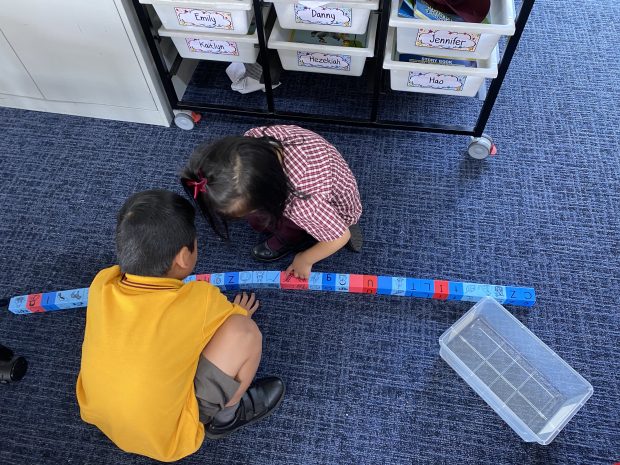
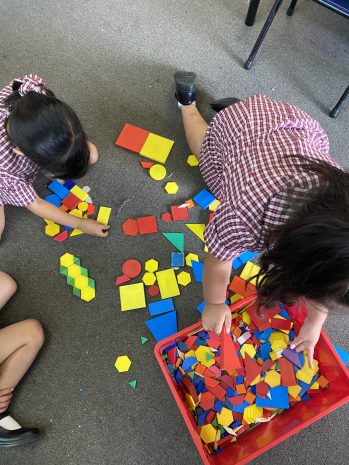
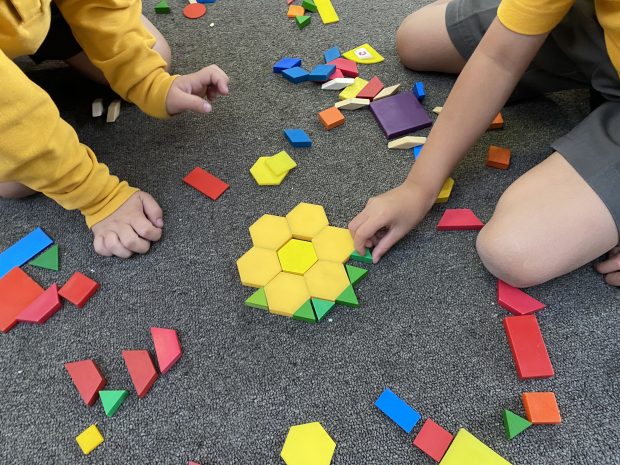
To be successful maths learners, students need to develop the skills of fluency, problem solving, reasoning, and understanding in the areas of Number and Algebra, Measurement and Geometry and Statistics and Probability. We aim to provide a supportive environment where students are encouraged to take risks and make mistakes, work at their individual point of need through targeted teaching sessions and explain and reflect on their learning. Competence in mathematics allows students to understand and participate fully in society.
Support and Intervention
Specialised programs are available to cater for students who have particular identified needs. These programs occur within the classroom or in small groups. Students are selected for these programs through a process of comprehensive assessment.
Programs include:
- MiniLit Sage – Literacy Intervention (P-2)
- MacqLit – Literacy Intervention (3-6)
- Mathematics Number intervention Program
- EAL/D program for new arrivals
- Literacy support staff and Learning Support Officers further monitor and support students to implement tailored programs